A red team evaluation is designed to assess how well an organization can withstand real-world cyberattacks by simulating the behavior of advanced threat actors. Instead of focusing on isolated technical flaws, it examines how attackers might move through systems, exploit weaknesses, and achieve objectives without being detected. This type of assessment provides a holistic view of cybersecurity maturity, combining technical, human, and procedural elements into one realistic attack simulation.
Security controls and detection capabilities
One of the primary areas assessed during a red team evaluation is the effectiveness of security controls and detection systems. This includes firewalls, endpoint protection, intrusion detection systems, and security information and event management tools. Evaluators test whether these systems can identify malicious activity as it happens or if threats can move silently within the environment. The goal is to determine how quickly and accurately defensive tools respond to realistic adversary behavior.
Incident response readiness and coordination
A key component of any red team evaluation is measuring how well an organization responds to active threats. This involves evaluating incident response processes, escalation procedures, and communication between security teams. Analysts observe how quickly alerts are investigated and how effectively teams coordinate under pressure. The simulation highlights gaps in decision-making speed, response accuracy, and internal communication, helping organizations improve real-time handling of cyber incidents before they escalate.
Human behavior and social engineering resistance
Human factors play a major role in modern cyberattacks, and a red team evaluation carefully examines employee awareness and response to social engineering attempts. This includes phishing simulations, credential harvesting techniques, and impersonation tactics designed to test user vigilance. By observing how individuals react to deceptive scenarios, organizations can identify training gaps and improve awareness programs, reducing the likelihood of attackers gaining initial access through human error.
Attack paths and lateral movement techniques
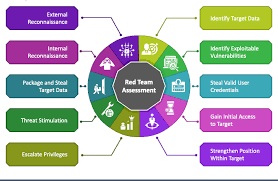
During a red team evaluation, specialists analyze how far an attacker could move once inside a network. This includes lateral movement between systems, privilege escalation, and attempts to access sensitive data or critical infrastructure. The focus is not just on entry points but also on how attackers expand their reach within an environment. Providers such as Swarmnetics conduct these assessments using structured methodologies that replicate real-world intrusion patterns with high accuracy.
Identity and access management weaknesses
Another critical area evaluated is identity and access management. A red team evaluation tests whether user credentials, permissions, and authentication mechanisms are properly secured. Weak or misconfigured access controls can allow attackers to escalate privileges or access restricted systems. By simulating credential theft and misuse scenarios, organizations gain insight into how identity-based attacks could impact their environment and what improvements are needed to strengthen access governance.
Data protection and exfiltration risks
Protecting sensitive data is a core objective of any security program, and a red team evaluation examines how easily data could be accessed or extracted during an attack. This includes testing encryption practices, data segmentation, and monitoring systems for unusual transfer activity. Evaluators simulate exfiltration attempts to determine whether security teams can detect and prevent unauthorized data movement before it results in a breach or compliance violation.
Security monitoring and visibility coverage
Visibility across networks and systems is another major focus area. A red team evaluation assesses whether security monitoring tools provide sufficient coverage to detect suspicious behavior across endpoints, cloud environments, and internal networks. It identifies blind spots where malicious activity could go unnoticed. Improving visibility ensures that security teams have the necessary context to detect threats early and respond effectively before attackers achieve their objectives within the environment.
Overall cyber resilience and organizational readiness
Ultimately, a red team evaluation measures the overall resilience of an organization against realistic cyber threats. It brings together technical, procedural, and human factors to assess how well defenses work as a unified system. The insights gained help organizations strengthen weak points, improve coordination, and refine security strategies. This comprehensive approach ensures continuous improvement and better preparedness for real-world attacks in an increasingly complex threat landscape.