Printed circuit board assembly
Printed circuit board (PCB) assembly services have undergone significant evolution over time, driven by advancements in technology, changes in market demands, and improvements in manufacturing processes. From humble beginnings to today’s sophisticated assembly techniques, the evolution of PCB assembly services has revolutionized the electronics industry and enabled the development of increasingly complex and innovative electronic devices.
The earliest PCB assembly services date back to the mid-20th century when PCBs were first introduced as a replacement for traditional wire-to-board connections in electronic devices. Early PCB assembly processes were labor-intensive and relied primarily on manual soldering techniques to attach components to the printed circuit board assembly services. As demand for electronic devices grew, manufacturers began to adopt more automated assembly methods, such as wave soldering and manual insertion machines, to improve efficiency and productivity.
The introduction of surface mount technology (SMT) in the 1980s marked a significant milestone in the evolution of PCB assembly services. SMT enabled the mounting of components directly onto the surface of the PCB, eliminating the need for holes and allowing for higher component densities and smaller form factors. This shift towards SMT assembly paved the way for the development of smaller, lighter, and more portable electronic devices, ushering in an era of miniaturization and innovation in PCB assembly services.
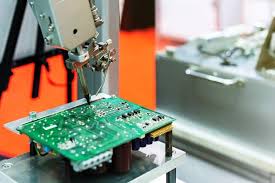
How has Printed circuit board assembly services evolved over time?
In addition to SMT, advancements in assembly equipment and processes have played a crucial role in the evolution of PCB assembly services. Automated pick-and-place machines, solder paste printers, reflow ovens, and automated optical inspection (AOI) systems have transformed the assembly process, enabling manufacturers to achieve higher levels of precision, consistency, and reliability. These advancements have also led to improvements in manufacturing efficiency, reduced cycle times, and lower production costs for PCB assemblies.
The evolution of PCB assembly services has also been driven by changes in materials and substrates used in PCB fabrication. Traditional materials such as FR-4 have been supplemented by high-performance materials such as flexible substrates, ceramic substrates, and metal-core PCBs, offering superior thermal management, electrical performance, and reliability. These advanced materials have enabled the development of PCB assemblies with higher power densities, faster signal speeds, and improved thermal dissipation, meeting the demands of increasingly complex electronic devices.
Furthermore, the globalization of manufacturing has had a profound impact on the evolution of PCB assembly services. With the rise of offshore manufacturing hubs in countries such as China, Taiwan, and India, PCB assembly services have become more accessible and cost-effective for electronics manufacturers worldwide. Outsourcing PCB assembly to specialized service providers in these regions has allowed companies to benefit from lower labor costs, faster turnaround times, and access to advanced manufacturing capabilities.
The emergence of new technologies and trends, such as the Internet of Things (IoT), Industry 4.0, and additive manufacturing, is driving further evolution in PCB assembly services. IoT and Industry 4.0 initiatives are driving demand for PCB assemblies with embedded sensors, wireless connectivity, and intelligent control capabilities, while additive manufacturing enables the rapid prototyping and production of complex PCB designs with custom features.
In conclusion, printed circuit board assembly services have evolved significantly over time, from manual soldering techniques to today’s highly automated and sophisticated assembly processes. Advancements in technology, changes in materials and substrates, globalization of manufacturing, and the emergence of new trends have all contributed to the evolution of PCB assembly services, enabling manufacturers to meet the demands of increasingly complex and innovative electronic devices. As technology continues to advance, PCB assembly services will continue to evolve, driving further innovation and efficiency in the electronics industry.