A global trade war is brewing as the U.S. imposes tariffs on a growing list of countries, heightening concerns about economic growth and roiling stock markets around the world.
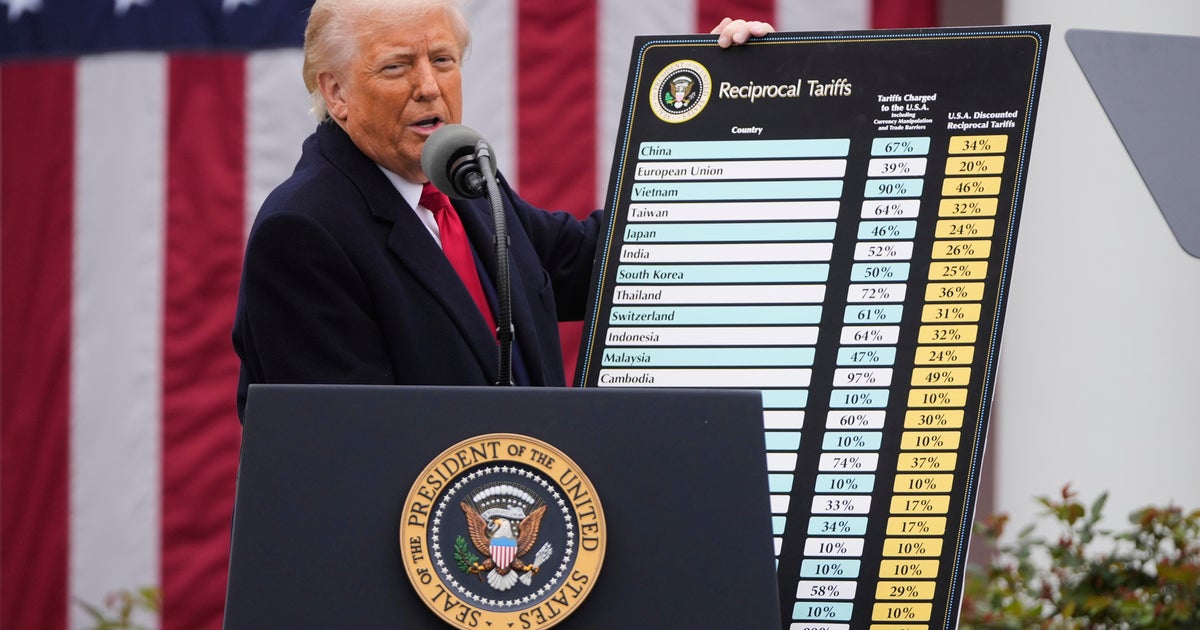
President Trump on April 2 announced so-called reciprocal tariffs on imports from about 90 nations that are above a 10% across-the-board tax applied to all imports to the U.S. Describing the announcement as “Liberation Day,” the president said the new taxes are needed to erase a trade deficit between the U.S. and other countries, ranging from China to the European Union.
Some nations will face only the universal tariff of 10%, while imports from dozens of other countries will be charged a higher specific reciprocal import levy. For instance, Australian imports will face the baseline rate of 10%, while China will face a rate that has jumped to 104% after slapping its own tariffs on U.S. imports.
“Reciprocal. That means they do it to us, and we do it to them,” Mr. Trump said in his remarks.
Asian nations will face the worst of the brunt, with Cambodia facing a tax rate at 49% and Vietnam at 46%, according to Nationwide Chief Economist Kathy Bostjancic.
Mr. Trump also said such levies will boost domestic manufacturing and level the playing field with other countries that impose higher tariffs on U.S. imports than the U.S. charges for their products. Still, economists are forecasting that the tariffs will cause inflation to reignite, while also prompting some trade partners to retaliate with higher tariffs on American imports to their nations.
If the tariffs are maintained by the Trump administration and if other nations impose retaliatory tariffs, both the U.S. and other countries “will suffer serious recessions,” said Mark Zandi, chief economist at Moody’s Analytics, in an email to CBS MoneyWatch.
China retaliated by saying it planned to impose a retaliatory 34% import fee on American products, followed by Mr. Trump retaliating with plans to impose an additional 50% tariff on its imports and China ratcheting up its rate to 84%.
Full list of Trump’s reciprocal tariffs by country
When will these tariffs go into effect?
The reciprocal rates went into effect at 12:01 a.m. on April 9. That’s in addition to a baseline 10% tariff which took effect at 12:01 a.m. on April 5.
How did the Trump administration decide what tariffs to charge which countries?
Mr. Trump said his administration determined the tariff rate for each country based on the monetary levies those nations charge on U.S. imports, as well as non-monetary trade barriers like regulations that make it tougher for American products to enter those markets.
The president added that the reciprocal tariffs are still only half the rates charged by those nations on U.S. products, characterizing his new levies as “kind.”
Are other countries retaliating against U.S. tariffs?
Yes. China said it would impose a 34% tariff on imports of all U.S. products starting April 10, and then raised the level to 84%. The Chinese Commerce Ministry also said it would implement tighter restrictions on exports of rare earths —materials used in products such as computer chips and electric vehicle batteries — as well impose 27 additional U.S. companies to trade sanctions.
“This is an aggressive, escalatory response that makes a near-term deal to end the trade war between the two superpowers highly unlikely,” analysts with investment adviser Capital Economics said in a research note.
The European Union announced on April 9 tariffs on more than $22 billion in U.S. products, including beauty products, soybeans and motorcycles, according to AFP.
“The EU considers U.S. tariffs unjustified and damaging, causing economic harm to both sides, as well as the global economy,” the European Commission said in a statement that was issued after EU member states approved the measures.
contributed to this report.